6 Best Gold Trading Apps and Platforms: Charts, Execution, Risk Tools Compared


A strong gold trading app should help you analyse XAU/USD, place and modify orders, monitor margin, and control downside during volatile sessions. Your best fit also depends on whether you want spot gold CFDs, futures, a gold ETF, or unleveraged exposure.
This app-first comparison focuses on charting, order workflow, execution, account protection, and trading style. Products, leverage, fees, and safeguards vary by region, so confirm local terms before opening an account.
Best Gold Trading Platforms Ranked
| App or broker ecosystem | Best fit | Platform access | Notable strength | Main consideration |
| M4Markets | Overall MT4/MT5 workflow | MT4, MT5, web and mobile | Flexible charting and order management | Experience depends on MetaTrader setup |
| Vantage | All-in-one CFD access | Proprietary app, MT4, MT5 | Broad mobile workflow | Costs differ by account type |
| Capital.com | Mobile chart analysis | Proprietary web and mobile app | Deep built-in charting | CFD availability varies by country |
| Pepperstone | Execution-focused traders | Proprietary app, MT4, MT5, cTrader, TradingView | Platform choice and active-trader workflow | Pricing model requires comparison |
| AvaTrade | Newer traders and risk tools | AvaTrade App, WebTrader, MT4, MT5 | Guided interface and risk features | Some tools may carry separate costs |
| Plus500 | Simple position controls | Proprietary web and mobile platform | Clear order and risk controls | Less emphasis on third-party platforms |
M4Markets — Best Overall App for Gold and Forex Trading
M4Markets takes first place in this comparison for traders who prefer established MetaTrader workflows. It supports MT4 and MT5 across mobile and web environments, giving users access to charts, indicators, order tickets, account monitoring, and gold and forex markets from a familiar interface. MT5 may suit traders who want broader market tools, additional order functions, and a more modern multi-asset layout.
Its value comes from combining broker access with MetaTrader’s ecosystem rather than a standalone proprietary app. That may suit active gold traders who want consistent layouts across devices or already use custom templates.
Before funding, review symbol specifications, spreads, swaps, leverage limits, and stop-distance rules. Newer traders can pair a demo account with this how to trade gold for beginners guide.
Vantage — Best All-in-One Gold CFD Trading Platform
Vantage is a practical option for users who want app-based market access alongside MT4 and MT5. Its gold offering centres on XAU/USD CFDs, while platform materials highlight mobile trading, charts, position management, copy trading, and several account structures. This flexibility may appeal to traders comparing proprietary convenience with MetaTrader functionality.
Choose the account model carefully. Spread-only pricing can be easier to read, while raw accounts may separate the spread from commission. Compare total cost for your typical size and holding period, including overnight financing.
Demo fills do not guarantee similar live execution. Test order modification, chart responsiveness, and stop placement during busy periods before committing larger capital.
Capital.com — Best Platform for Mobile Gold Charts
Capital.com stands out for built-in charting and a streamlined proprietary interface. Its current platform materials describe thousands of CFD markets, more than 100 indicators, price alerts, market analysis, and risk tools across mobile and web trading. Gold is available as a CFD in eligible regions, allowing users to follow spot gold price movements without owning physical metal.
The Capital.com mobile app may suit visual traders who want analysis and execution in one environment. Indicators alone do not create an edge; a clean setup is often more useful than stacked signals.
Check local order types, leverage settings, and funding methods. CFDs differ from a gold ETF because they involve margin, financing costs, and counterparty exposure.
Pepperstone — Best Gold Broker App for Fast Execution
Pepperstone is positioned here for execution-focused users and platform choice. Its ecosystem includes a proprietary mobile app as well as MT4, MT5, cTrader, and TradingView access. Official materials also distinguish Standard and Razor-style pricing for spot gold, which helps active traders compare an all-inclusive spread with a structure that separates pricing components.
Execution claims are not promises for every order. Fill quality can change with liquidity, connection, size, volatility, and trading conditions. Compare live results using requested price, fill price, timestamp, spread, and rejected or partial fills.
Speed is only one factor. Stability, risk controls, and predictable total costs also matter for active trading.
AvaTrade — Best App for Gold Trading Beginners
The AvaTrade App combines charts, indicators, account management, and guided risk features in a relatively accessible interface. AvaTrade also offers MT4, MT5, WebTrader, signals, and Trading Central integration. Its proprietary AvaProtect feature can protect selected eligible trades for a defined period in exchange for an upfront cost, subject to product and regional conditions.
For beginners, the advantage is a guided workflow: identify a setup, estimate downside, place a stop, monitor margin, and review the result. No interface removes market risk.
Use a demo to learn order behaviour, then reassess with a small live position. Simulated fills and spreads may differ from live conditions.
Plus500 — Best Trading App for Simple Risk Controls
Plus500 uses a proprietary platform designed around direct market selection, chart viewing, and position controls. Depending on instrument and jurisdiction, available tools may include stop-loss, trailing stop, price alerts, and guaranteed stops. A guaranteed stop can reduce gap-related execution uncertainty, but it may be limited to eligible products and can involve a premium.
This may appeal to users who want a straightforward app without configuring third-party software. The trade-off is a more closed ecosystem than MT4, MT5, or cTrader.
Plus500 also has a separate US futures offering. Do not assume CFD and futures products or protections are interchangeable; confirm the serving entity and available instrument.
Gold Trading Platform Evaluation Method
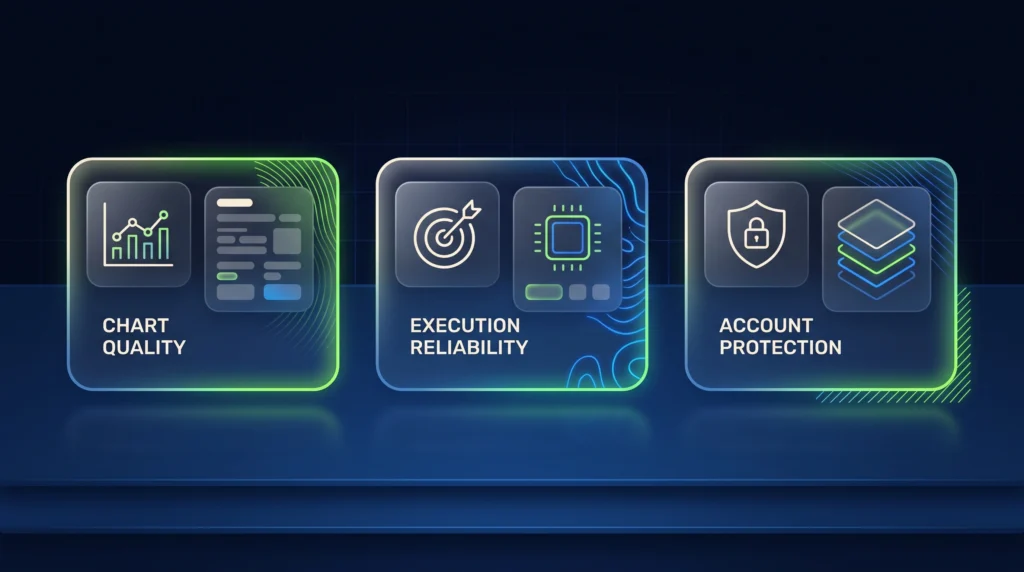
Our evaluation prioritises practical use. A platform scores well when it clarifies market access, provides usable charts, supports controlled orders, explains costs, and helps traders assess execution and margin risk.
Gold Market Access and XAU/USD Availability
Identify the actual product. “Gold” may mean spot CFDs, futures contracts, options, mining shares, or ETF CFDs. These differ in pricing, expiry, leverage, liquidity, and ownership.
Check contract size, minimum trade, quote currency, hours, and expiry. Short-term traders may prefer CFDs, while investors seeking unleveraged exposure may prefer an exchange-traded fund.
Mobile Charting Depth and Technical Tools
Useful charting needs readable candlesticks, flexible timeframes, drawing tools, and a manageable indicator library. You should be able to save layouts and inspect price action without clutter.
This guide to best indicators for gold trading shows how indicators can support analysis without replacing risk rules.
Execution Speed, Order Quality, and Platform Stability
Execution quality is the gap between intended and received results. Review slippage, rejections, fill speed, stop behaviour, and availability during volatility. A fast app with inconsistent fills may be less useful than a stable platform.
Record several live trades before drawing conclusions. One fill does not establish a reliable pattern or guarantee future results.
Risk Tools, Margin Controls, and Trading Account Protection
A serious app should show used margin, free margin, unrealised results, and liquidation risk. It should also support stop-loss and take-profit orders.
Managing leverage matters because a small gold move can have a large account impact. Required Margin equals Trade Size divided by Leverage, while practical risk also depends on stop distance, size, spread, and slippage.
Gold Broker Regulation, Security, and Client Safeguards
When you choose a gold broker, verify the legal entity, regulator, client-money arrangements, complaints process, and negative balance rules. Brands may operate through entities with different protections.
Review login security, withdrawals, identity checks, and account recovery. A polished app does not replace due diligence. This best broker for gold trading overview adds useful selection criteria.
Gold Trading Platform Types and Broker App Fit
Platform fit depends on strategy, technical needs, and preferred instrument. Proprietary apps usually prioritise simplicity; third-party platforms often provide deeper customisation.
Proprietary Broker Apps vs MT4 and MT5
Proprietary apps can integrate research, funding, and execution. MT4 and MT5 provide familiar charting, order management, indicators, and automated tools.
MT4 remains common for forex and CFDs. MT5 adds timeframes, order functions, and multi-asset features. Broker implementation still matters because symbol specifications and trading conditions come from the broker.
TradingView Workflows for Gold and Forex
TradingView access can reduce friction for traders who already build setups there. Check whether analysis and orders share one workflow or require app switching.
Review indicators, saved layouts, order-ticket clarity, and web-mobile synchronisation. Strong charts matter only when execution remains controlled and reliable.
Gold CFD Apps vs Gold ETFs and Gold Futures Platforms
Gold CFDs typically provide leveraged exposure without ownership of physical gold. A gold ETF may offer exchange-traded exposure through a securities account, while futures trading uses standardised contracts with expiry, tick values, and exchange margin. Regulators advise traders to distinguish carefully among futures, securities, and physical metals before acting.
Trading gold futures requires attention to contract months and rollover. Gold futures or micro gold contracts may provide different position sizes, but access depends on broker, jurisdiction, and account approval. Gold options trading adds expiry and volatility considerations that many CFD apps do not support directly.
Mobile Trading Platforms vs Desktop-Linked Workflows
Mobile apps suit monitoring, alerts, and straightforward orders. Desktop platforms remain better for multi-chart analysis, detailed review, and complex workflows.
A practical approach is to plan on desktop and manage via the app. Test connection recovery, chart synchronisation, authentication, and app closure during an open trade.
Charting Features for Gold and Forex Trading
Gold can react quickly to rates, currencies, geopolitical risk, and positioning. Charts should support a defined process rather than encourage constant trading.
Indicators, Timeframes, and Gold Price Data
Select timeframes that match your holding period. A one-minute chart may suit execution timing, while hourly and daily charts provide broader context. Moving averages, momentum measures, and volatility tools may indicate trend, pressure, or changing market conditions, but none predicts the next move with certainty.
Data quality also matters. Check whether pricing is live, indicative, delayed, or derived from the broker’s own feed.
Drawing Tools, Multi-Chart Layouts, and Trading Signals
Horizontal levels, trend lines, and measured ranges can be more practical than a crowded indicator stack. Multi-chart layouts help compare intraday structure with a higher timeframe or watch gold alongside the US dollar and bond-market proxies.
Trading signals, including Trading Central research where offered, should be treated as inputs rather than instructions. Validate entry logic, invalidation level, and position risk before acting.
Alerts, Market Analysis, and Mobile Chart Usability
Alerts reduce the need to stare at a screen. Useful options include price, percentage-move, and indicator-based notifications. Confirm whether an alert is informational or can trigger an order.
For shorter holding periods, these intraday gold trading strategies can help you connect alerts with planned entries, exits, and risk limits. Market volatility can still cause gaps or slippage around major releases.
Execution Quality and Gold Trading Costs
Low advertised costs do not automatically mean low realised costs. Your outcome reflects spreads, commissions, financing, conversion charges, slippage, and how efficiently you enter and exit.
Order Types, Execution Speed, and Slippage
Market orders prioritise execution but not an exact price. Limit orders prioritise price but may remain unfilled. Stop orders can help automate exits, although standard stops may execute beyond the requested level during fast movement.
Compare real trading records over multiple sessions. Active gold traders should pay particular attention to fills around major economic releases, when liquidity and spreads may change quickly.
XAU/USD Spreads, Commissions, and Overnight Fees
The gold spread is the immediate difference between buy and sell prices. Some accounts embed most costs in that spread; others advertise tighter pricing and add a trading commission. Positions held overnight may also incur swaps or financing.
Estimate total cost for your actual style:
- Spread cost at entry and exit
- Commission per side or round turn
- Overnight financing for each holding day
- Currency-conversion or inactivity charges
- Slippage during volatile execution
Risk Management Tools and Trading Account Safety
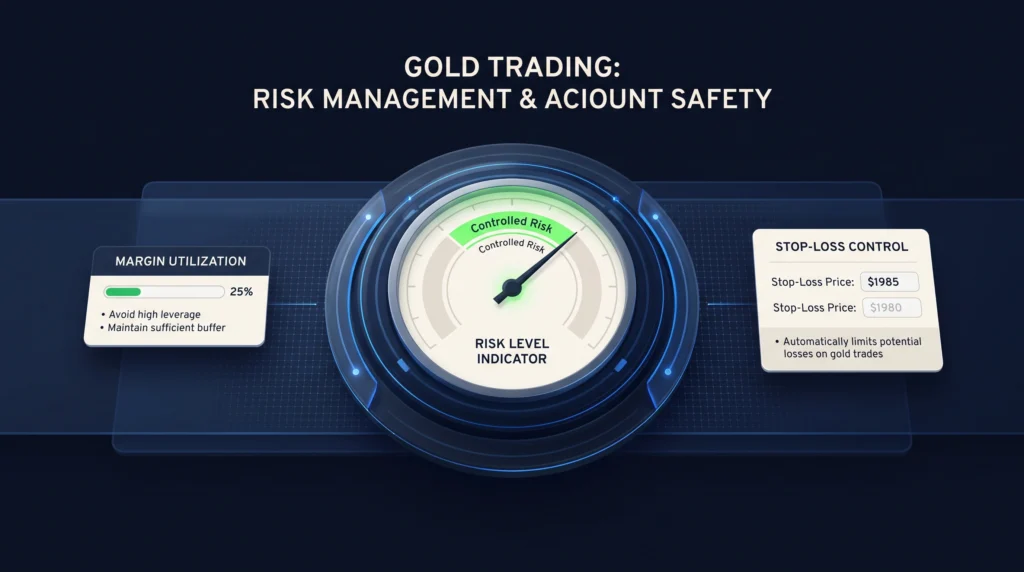
Risk controls do not make leveraged products safe, but they can help limit avoidable mistakes. The best tools are those you configure before market pressure affects your decisions.
Stop-Loss, Take-Profit, Margin Alerts, and Negative Balance Protection
Set position size from acceptable loss, not from maximum available leverage. A stop-loss defines an intended exit, while take-profit can automate part of a plan. Margin alerts should give you time to respond, but rapid moves may still lead to forced closure.
Guaranteed stops may limit gap risk on eligible instruments, usually with conditions or cost. Negative balance protection depends on entity and jurisdiction. Broker disclosures commonly warn that retail accounts lose money when trading leveraged products, and many lose money when trading CFDs because leverage magnifies both gains and losses.
Choosing Best Gold Broker App
There is no universal best platform. The right choice depends on your skill level, market, holding period, and need for third-party tools.
Best Platform for Beginner Gold Traders
Beginners should prioritise a demo account, clear order tickets, visible margin data, simple charts, and accessible education. AvaTrade and Plus500 may feel approachable through proprietary interfaces, while M4Markets can suit learners who want to build MetaTrader skills from the start.
Avoid choosing solely on leverage or promotional pricing. A smaller position and clear exit plan usually matter more than extra features.
Best Trading App for Gold Day Trading
Day traders need responsive charts, quick order modification, stable execution, and transparent costs. Pepperstone, M4Markets, and Capital.com may deserve closer review depending on preferred platform and local availability.
Test the full workflow under realistic conditions: open, modify, partially close if supported, and exit. Mobile gold trading should remain a controlled process, not a reason to trade impulsively.
Best App for Gold Signals and Copy Trading
AvaTrade and Vantage offer ecosystems that may include signals, analysis, or copy-oriented tools, depending on region and account setup. These features can help generate ideas, but they also introduce model risk and behavioural risk.
Review how a signal defines entry, stop, target, and time horizon. When copying, check allocation controls and whether the strategy’s drawdown fits your risk tolerance.
Best Gold Broker Platform for Professional Traders
Experienced users may value platform choice, depth of market, automation, exportable history, multi-device continuity, and pricing transparency. M4Markets, Pepperstone, and Vantage provide MetaTrader access, while Pepperstone also supports other third-party workflows.
Professional-grade features do not guarantee professional results. Traders should still verify execution statistics with their own records and assess counterparty, leverage, and concentration risk.
How to Start Trading Gold on Mobile
Treat setup as a risk process rather than a registration process. Your first objective is to confirm that the app, instrument, and account behave as expected.
Demo Account Checks Before Live Trading
Use a demo to test:
- Gold symbol and contract specifications
- Market, limit, stop, and trailing orders
- Chart saving and alert delivery
- Margin display and stop-out information
- Position modification and closure
- Connection recovery after app restart
Demo results may not match live fills, but the exercise reveals interface weaknesses before real capital is involved.
Trading Account Funding and Position Sizing
Fund only after confirming entity details, payment rules, and withdrawal procedures. Then size each position from a predefined monetary risk.
For example, if you can tolerate a $25 loss and your planned stop represents $5 of risk per unit, the theoretical maximum is five units before costs. Adjust for the spread, possible slippage, and broker contract specifications. This simple calculation may suggest a smaller trade than the platform’s margin limit allows.
XAU/USD Order Placement, Trade Monitoring, and Exit Management
Before entry, write down direction, trigger, stop, target, and maximum loss. Place protective orders where available and check that the values appear correctly in account currency.
Monitor the reason for the trade, not every tick. If conditions change, follow a predefined adjustment rule rather than widening the stop to avoid a loss. After exit, save the chart and execution details. A journal helps separate strategy quality from platform or fill issues.
Gold Trading App FAQ
Which App Offers Gold Trading for Beginners?
AvaTrade, Plus500, Capital.com, and MetaTrader-based broker apps can all be accessible to beginners, but suitability depends on your region and preferred product. Look for a demo account, clear margin information, straightforward stop-loss placement, and educational support. Start with small size after practising, because an intuitive interface does not reduce the volatility or leverage risk of gold CFDs.
Which Brokers Offer Gold Through Mobile Platforms?
Many forex and CFD brokers offer gold via mobile apps, commonly as XAU/USD CFDs. M4Markets, Vantage, Capital.com, Pepperstone, AvaTrade, and Plus500 provide mobile access through proprietary software, MetaTrader, or both. Availability, account entity, leverage, contract size, and trading hours vary by jurisdiction, so confirm the product specification before opening or funding an account.
Which Forex Broker Provides Best XAU/USD Execution?
No broker can be declared best for every trader or every market condition. Execution depends on platform stability, liquidity, order type, size, location, volatility, and connection quality. Compare several small live trades using requested price, fill price, timing, spread, and rejection data. A broker that performs consistently for your strategy may be more suitable than one with the fastest advertised figure.
Can Mobile Apps Support Gold Options Trading and Gold Futures?
Yes, some mobile platforms support gold futures, micro futures, or options, but many mainstream gold apps focus on CFDs instead. Futures and options require suitable account permissions and involve expiry, contract specifications, and exchange margin. Check whether the app offers the actual listed contract or only a CFD whose price references an underlying futures or spot market.
How Do Gold ETFs and Physical Gold Differ from CFDs?
A gold ETF is an exchange-traded security designed to provide a form of gold exposure, while physical gold involves ownership and storage of metal. CFDs are leveraged agreements based on price movement and do not provide ownership of bullion. Costs, liquidity, tax treatment, counterparty exposure, and holding suitability differ, so the best gold product depends on your objective and jurisdiction.
Which Risk Tools Matter Most When Trading Forex and Gold?
Core tools include stop-loss, take-profit, margin monitoring, price alerts, position-size controls, and clear account-level exposure. Guaranteed stops may add protection against gaps where available, while negative balance protection may limit account deficits under applicable rules. None removes market risk. Effective risk management combines platform tools with modest leverage, predefined loss limits, and disciplined review of trading conditions.