Best Crypto Trading Apps in India: Mobile Features, Security, and Usability

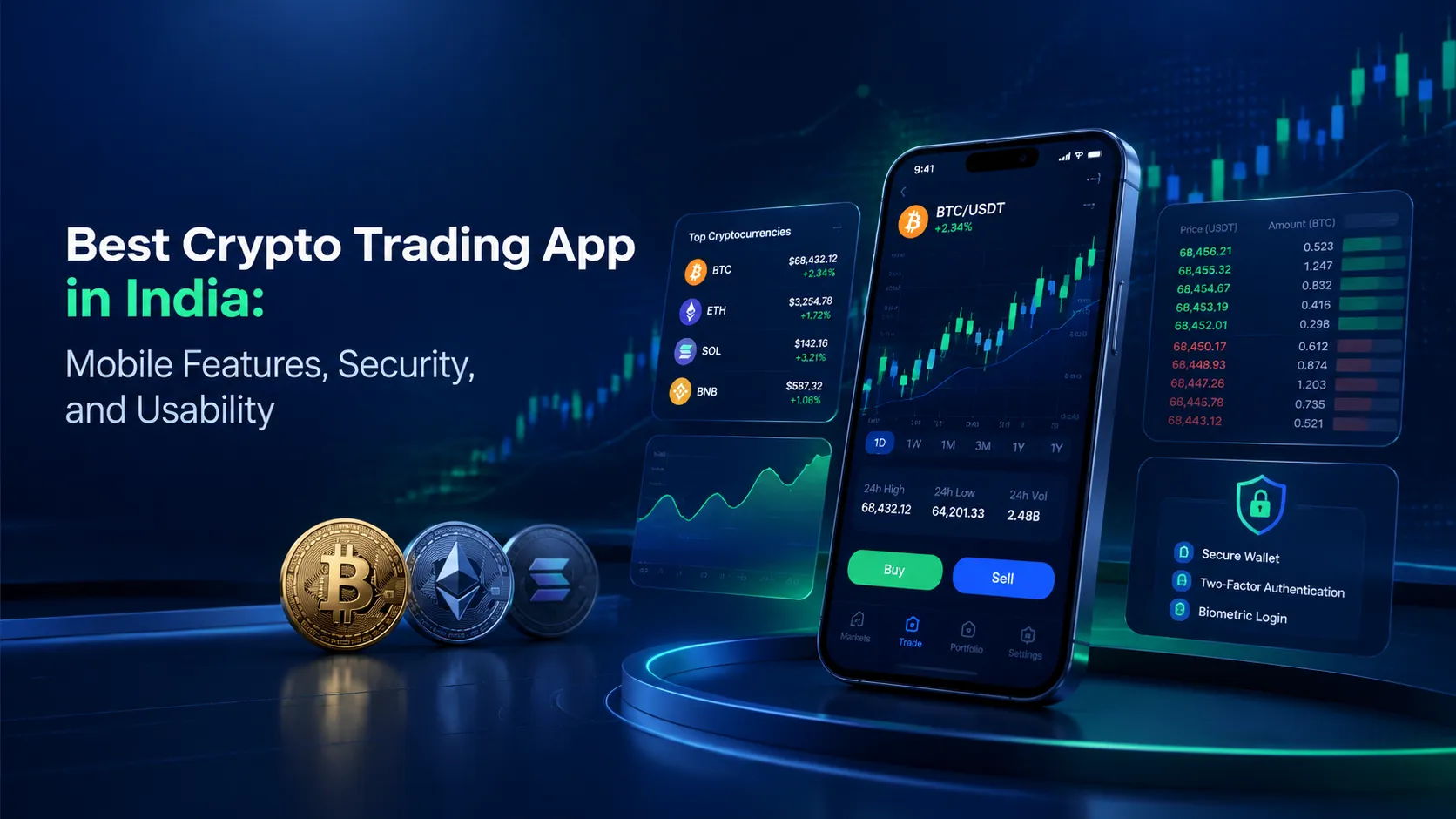
For a growing number of Indian investors, a smartphone is now the main gateway into crypto trading. Mobile apps let users check prices, move funds, and manage a portfolio without sitting at a desktop, which has made app quality a central part of how people evaluate any crypto trading platform. But “best” depends on what a person needs: a beginner opening a first account cares about different things than someone comparing spot and derivatives access across top crypto trading brokers in India.
Comparing a crypto app in India typically involves several categories at once: which assets and markets are supported, what trading functionality exists, the fee structure, the security controls in place, whether INR deposits and withdrawals are supported, day-to-day usability, technical performance, customer support, and access to tax-related records. App features, supported coins, and regulatory status can all change over time, and no single app is necessarily the right fit for every user or every stage of a crypto journey.
Key Takeaways
- Mobile crypto apps can differ significantly in supported assets, fee structures, security controls, and available markets, even when marketed similarly.
- Security features, FIU-India registration status, and account-protection tools are important comparison points, not just app-store ratings.
- Usability involves more than visual design — it can include navigation, order functionality, charting tools, notifications, and account management.
- INR deposits, withdrawals, UPI support, transaction records, and localised customer support can be particularly relevant for users based in India.
- The number of supported cryptocurrencies or an app-store star rating alone does not provide a complete basis for comparing platforms.
Top 5 Crypto Trading Apps in India
The apps below are commonly discussed in India-focused comparisons of crypto exchanges and are referenced here descriptively, not as a ranked recommendation. Availability, fees, and features for each can change, so current platform information is generally worth checking directly before forming an opinion.
CoinDCX
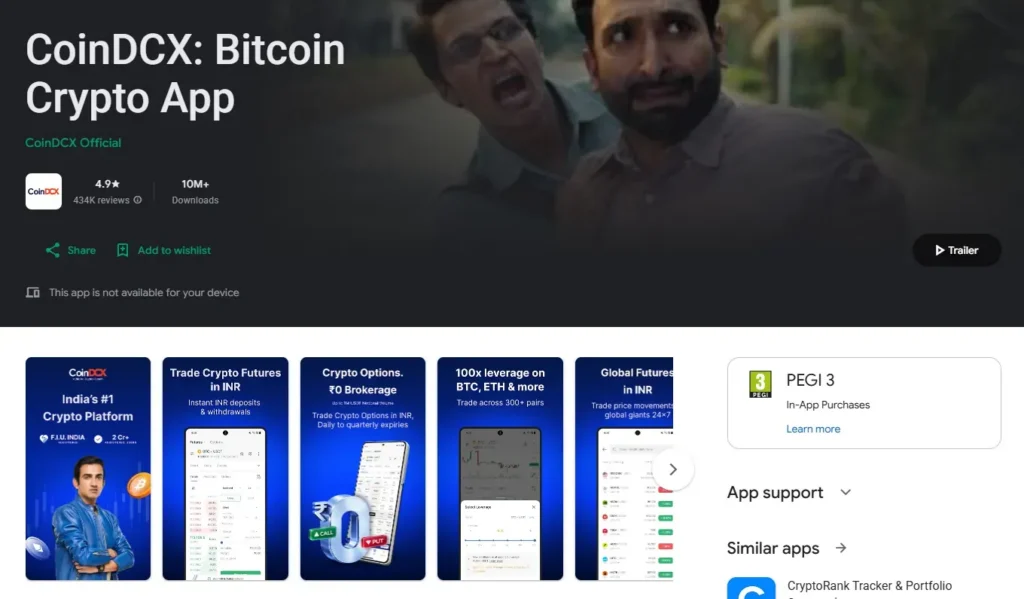
CoinDCX is one of India’s largest domestically focused crypto exchanges, offering a dedicated mobile app alongside its web platform. The app is built around an India-first user base, with INR-denominated pricing presented throughout the interface rather than only in USD or USDT terms.
The mobile app typically supports a wide range of digital assets, spot trading, and INR deposit and withdrawal functionality, along with a transaction history section for reviewing past activity. Account security options commonly include two-factor authentication and biometric login. Because the platform is structured around Indian users, elements such as INR balances, UPI-linked funding, and India-specific customer support can shape the overall mobile experience.
CoinSwitch
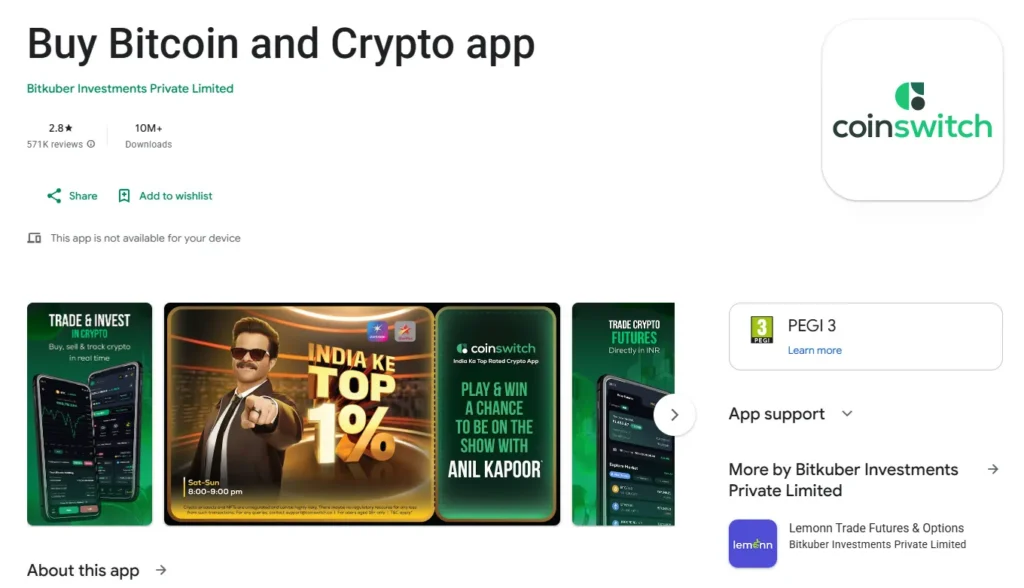
CoinSwitch is a prominent Indian crypto platform known for a mobile-first, simplified user experience aimed largely at newer users. The app is commonly described as approachable for people opening their first crypto account, with a relatively streamlined interface compared to more feature-dense trading platforms.
The app generally supports INR funding, portfolio tracking, and basic educational content designed to explain concepts as users progress. A more advanced offering is sometimes marketed separately for users seeking additional charting or trading functionality. This points to a broader distinction worth noting: straightforward asset access through a simple interface is not the same as a full-featured, advanced trading environment, and users may outgrow one or prefer the other depending on their goals.
ZebPay
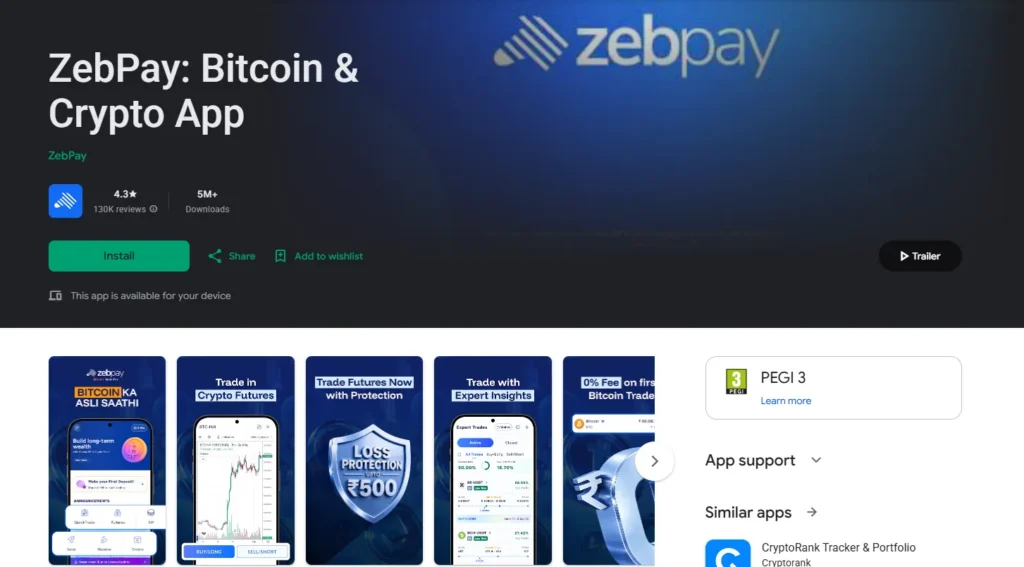
ZebPay is one of the longer-established crypto platforms serving Indian users, available through both mobile and web interfaces. The app generally supports app-based trading, a defined list of supported assets, and account management features accessible from a mobile device.
Security controls commonly referenced for ZebPay include two-factor authentication and account-level protections, alongside INR-related functionality for deposits and withdrawals. As with other apps, published fee schedules and available features are worth checking directly, since these can vary by account tier and change over time. Mobile usability for an established platform like this is often evaluated on how well older feature sets have been adapted into a modern, touch-first design.
Mudrex
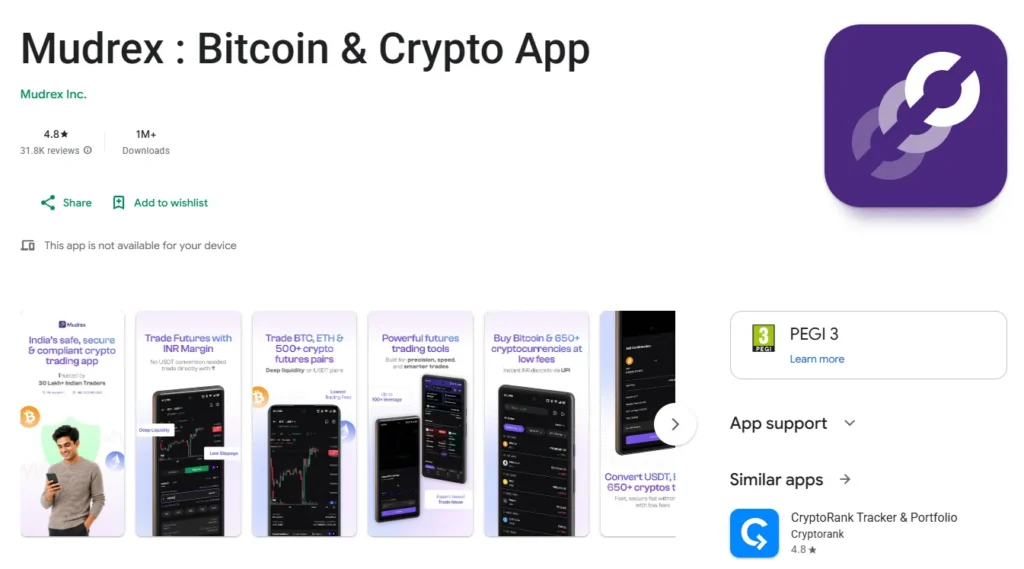
Mudrex is an India-focused crypto platform with a mobile app oriented toward accessible entry points into digital assets, including options such as recurring investment tools. The interface is generally structured to keep core functions — funding, holdings, and transaction history — within easy reach.
INR funding, basic account management, and transaction records are commonly available features. Some additional platform tools, such as automated or rule-based investment products, may be presented within the app as optional add-ons rather than core trading functionality. How simplicity is balanced against these additional features can influence how the mobile app feels in practice, particularly for someone comparing it against a more conventional exchange interface.
Binance
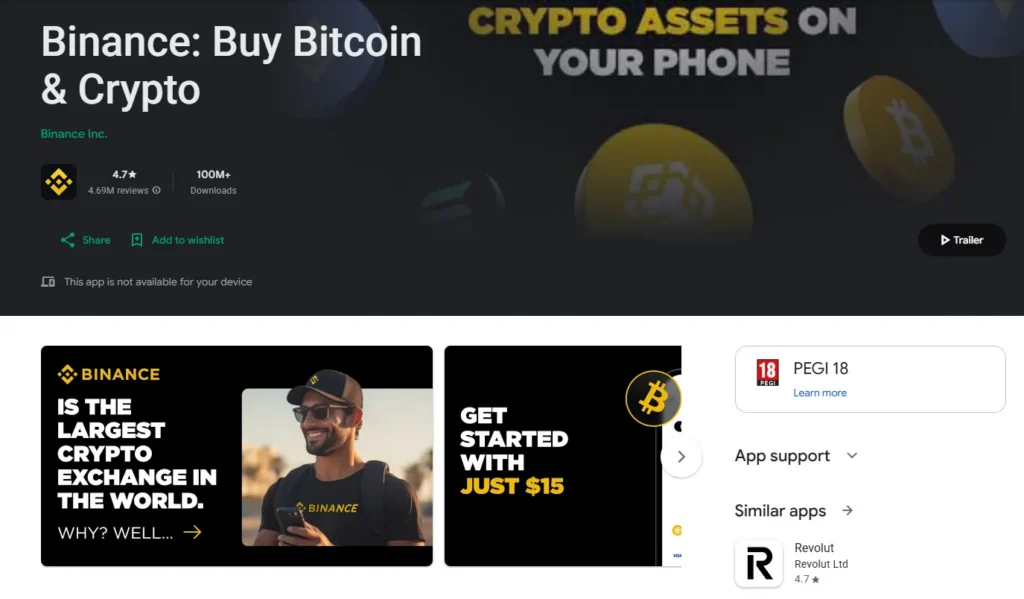
Binance is a major international crypto platform with one of the more comprehensive mobile applications in the sector, covering a broad range of markets beyond spot trading. Its app commonly includes advanced charting tools (in some cases through TradingView integration), account security features, multiple payment options, and access to more advanced trading products such as futures and options.
This breadth of functionality is often cited as an advantage for experienced users, but it can also mean a denser, more complex interface for someone opening their first account. It’s also worth noting that, as an international platform, India-specific availability, registration status, and account conditions for Binance can differ from purely domestic apps and are subject to change, so current terms are generally worth confirming directly.
Mobile Crypto Trading Apps in India
Not every app labelled a “crypto trading app” offers the same underlying service, and the distinctions below can meaningfully affect what using the app is actually like.
Availability on App Store and Google Play
Most major crypto exchanges in India distribute their mobile apps through both the Apple App Store and Google Play, and app store listings commonly disclose the developer’s identity along with a summary of data collected, which is one way users can review app privacy and security before installing an app for crypto. App developers are generally required to keep these listings updated as features change, so checking the current listing — rather than relying on older reviews — is generally a more reliable way to confirm what a given version of the app actually supports.
Exchange Apps vs Broker Apps
Exchange apps generally provide direct access to a crypto market, where a user’s account holds the underlying digital asset and trades settle against an order book or liquidity pool. Broker apps, by contrast, may offer exposure to price movement through derivative products such as CFDs, without the user holding the underlying coin.
These two models differ in custody (who actually holds the asset), the potential use of leverage, and settlement mechanics. An exchange-based trade in Bitcoin transfers ownership of BTC to the user’s wallet, while a CFD position reflects only a contractual price exposure, which is a structurally different arrangement even if both appear as “buy” and “sell” buttons in an app.
Spot, Futures, Margin and CFD Functionality
Several distinct product types can appear inside a single mobile app, and each carries different mechanics:
- Spot trading — direct exchange of one asset for another (for example, INR for BTC) at the current market price.
- Futures contracts — agreements tied to an asset’s future price, often involving leverage.
- Margin products — borrowed funds used to increase position size relative to deposited capital.
- CFD-based products — contracts that track price movement without asset ownership.
The presence of these products generally affects the account requirements, verification steps, and interface complexity a user encounters, without this description constituting instructions on how or when to use any of them.
Crypto futures and crypto options fall under the broader category of crypto derivatives, and several apps in India now support crypto futures trading in India directly through their mobile interface, alongside a smaller number offering crypto options trading in India. Someone looking to start crypto futures or start crypto options trading will typically encounter additional verification steps and risk disclosures before these markets become accessible, reflecting the higher complexity of futures trading and options trading relative to straightforward spot exchange. Apps also differ in the number of crypto futures pairs offered, which affects how many assets are actually available once a user moves beyond spot markets.
Why App Type Matters
Two apps that both describe themselves as offering “crypto trading” can differ substantially in what a user is actually able to do, what they own, and how their account is regulated. Recognising whether an app functions as a direct exchange or as a broker-style platform is often a useful starting point before comparing anything else.
Mobile App Usability and Interface Design
Usability is frequently reduced to how an app looks, but in practice it spans several functional areas that affect day-to-day use.
Navigation and Account Overview
Core usability elements typically include a portfolio overview, balance screens, transaction history, and account settings. Clear navigation can reduce the friction involved in moving between these areas, particularly for users checking balances or reviewing past activity frequently.
Trading Screens and Order Interfaces
Mobile apps present market data, pricing, order types, and trade confirmations in varying formats. Some apps favour a simplified single-screen buy/sell layout, while others present a fuller trading screen with order books and multiple order types. Neither design is universally described as superior — the appropriate format generally depends on the user’s familiarity with markets.
Performance and Stability
Technical performance covers loading times, app responsiveness, crash frequency, scheduled maintenance windows, and behaviour during periods of high market activity, when server load across the industry tends to increase. Because pricing and account data change continuously, technical stability is often considered a meaningful component of overall mobile usability.
Security Features in Crypto Trading Apps
Security is one of the areas most frequently highlighted in comparisons of a crypto exchange’s mobile app, partly because crypto assets are generally non-recoverable once transferred without authorisation.
Two-Factor Authentication and Biometrics
Common security controls include two-factor authentication (2FA), biometric login (fingerprint or facial recognition), passkeys, and device verification prompts. Some of these features exist primarily for convenience, such as faster login, while others are specifically designed to reduce the likelihood of unauthorised account access.
Withdrawal Controls and Account Protection
| Security Feature | Purpose |
| Withdrawal address whitelisting | Restricts withdrawals to pre-approved wallet addresses |
| Withdrawal confirmation delays | Adds a time buffer before large withdrawals process |
| Anti-phishing codes | Helps users identify genuine platform communications |
| Login alerts | Notifies users of sign-ins from new devices or locations |
These account-level protections can vary considerably between platforms, and not every feature is enabled by default, which makes reviewing an app’s privacy and security settings directly a relevant step for any user.
Device and Session Management
Some apps allow users to review a list of active login sessions, recognised devices, and recent account activity from within the app. Visibility into who or what has accessed an account is often considered relevant to overall mobile security, separate from the authentication method used to log in.
Regulatory Status and User Protection
Regulatory registration is a distinct concept from platform quality or security, though the two are sometimes conflated in casual comparisons.
FIU-India Registration
Registration with the Financial Intelligence Unit-India (FIU-IND) applies to entities offering virtual digital asset (VDA) services under India’s anti-money laundering framework. Platforms including CoinDCX, CoinSwitch, WazirX, and ZebPay have been named among registered entities in government disclosures, and the FIU has since taken compliance action — including notices issued to a number of unregistered offshore platforms. Registration reflects a compliance status under the Prevention of Money Laundering Act rather than a guarantee of platform security, service quality, or financial stability.
KYC and AML Procedures
Identity verification (KYC) and ongoing transaction monitoring are standard requirements for registered VDA service providers in India. These procedures can affect how quickly an account becomes active and may require additional documentation depending on the level of account access requested.
International Regulatory Oversight
Internationally operating apps, such as Binance, can be subject to licensing or supervisory frameworks in other jurisdictions in addition to any registration held in India. Oversight in another country is a separate matter from India-specific FIU-IND registration, and service availability for Indian users can be shaped by both.
It’s worth noting that using a platform without FIU-India registration, or an offshore app operating outside current guidelines, may mean there is no regulatory recourse for any loss connected to that account, since Indian authorities generally have limited standing over entities outside the registered framework. This is a distinct consideration from platform popularity or app-store ratings, and is one of the reasons registration status is commonly checked before funding a new account.
Crypto App Fees and Trading Costs
Cost comparisons across apps generally require looking beyond a single headline number.
Trading Fees
Maker and taker fees, along with other commissions, commonly apply to trades placed through a mobile app. Fee levels can vary depending on the product type (spot versus futures, for example), the user’s trading volume, and account tier, with lower fees sometimes offered at higher volume levels.
Spreads and Price Differences
A spread refers to the difference between the price at which an asset can be bought and the price at which it can be sold at a given moment. Exchange-based pricing models generally derive spreads from order-book activity, while broker-based pricing models may set spreads independently, meaning quoted prices for the same asset can differ between platform types.
Deposits, Withdrawals and Conversion Fees
- Fiat deposit fees, which may apply depending on payment method
- Withdrawal fees, both for INR and for crypto transfers
- Currency-conversion costs when moving between INR and other denominations
Because these additional charges exist alongside the advertised trading commission, the total cost of using an app is not always reflected by the headline trading fee alone.
INR Payments and Mobile Account Management
For users based in India, how an app handles rupee-denominated funds is often a practical starting point for comparison.
INR Deposits and Withdrawals
Direct INR funding allows users to move between local currency and crypto without relying on an intermediate stablecoin. Availability of INR deposits and withdrawals can differ between platforms and, in some cases, between account verification levels on the same platform.
Some platforms also promote low entry points for new users, allowing an account to be opened and funded with amounts as small as ₹100, which can make starting a crypto position more accessible for someone testing an app before committing larger sums. This kind of low minimum is separate from any platform’s overall fee structure, so a low starting deposit does not necessarily mean low trading fees apply across every product.
UPI and Bank Transfer Support
UPI and direct bank transfers are among the more commonly integrated INR payment methods within Indian crypto apps’ mobile account management sections. Supported payment rails are not static and can change based on banking partnerships or regulatory conditions.
Transaction Limits and Processing Times
| Factor | What It Covers |
| Minimum/maximum limits | Caps on deposit or withdrawal amounts per transaction or period |
| Settlement time | How long a transfer typically takes to reflect in an account |
| Verification delays | Additional checks that can extend processing beyond the advertised window |
Advertised processing times are generally best treated as estimates, since actual settlement can be affected by banking processes or platform-side verification.
Trading Tools and Market Data on Mobile
Interactive Charts
Mobile charting tools commonly include multiple timeframes, basic price indicators, and different market views, sometimes through third-party integrations such as TradingView. This is described here in terms of what such tools display, not as guidance on how they should be interpreted or applied.
Order Types and Market Information
Apps can present varying levels of detail, from simple market-price execution to more detailed crypto order types, order-book visibility, and trading-pair information. More advanced order functionality generally adds both capability and interface complexity at the same time.
Price Alerts and Notifications
Price alerts, deposit or withdrawal confirmations, and security notifications are common push-notification categories. These features generally serve an account-awareness role and are described here as informational tools rather than trading signals.
Supported Cryptocurrencies and Markets
Number of Supported Assets
A headline figure such as “400+ supported assets” does not necessarily reflect how many markets are actually usable, since some listed assets may have limited trading pairs, low liquidity, or restricted INR access.
Beyond Bitcoin, apps operating in India commonly list ETH and a range of other crypto coins, though the depth of trading pairs for lesser-known tokens can vary widely. Lists of top crypto coins by market capitalization are often used as a starting reference point, but a coin appearing on such a list does not guarantee that every India-based app supports direct INR trading for it. Someone looking to trade BTC or trade ETH specifically will generally find deeper liquidity than for smaller-cap tokens, simply because larger, more established assets attract more trading activity across exchanges.
Liquidity and Trading Volume
Liquidity refers to how easily an asset can be bought or sold without materially moving its price. Thin liquidity can widen spreads and affect how a transaction executes, and liquidity levels can differ substantially even between assets listed on the same app.
Spot and Derivatives Access
Spot markets, futures, margin, options, and CFD-style products represent conceptually different ways of gaining exposure to an asset’s price. The presence of derivative products within an app generally increases the range of available functionality, which can also increase the complexity a user needs to navigate.
Tax Records and Account Statements
Transaction History
Accessible records covering trades, deposits, withdrawals, and fees are a common feature within a mobile app’s account section, though more detailed exports are sometimes only available through the corresponding web platform.
TDS and Tax-Related Information
India’s crypto tax framework includes a Tax Deducted at Source (TDS) component applied to certain transactions. Apps may surface transaction-level information relevant to this framework, but this information is generally distinct from a user’s own tax-filing responsibilities, which remain separate from what any platform provides.
CSV and Tax Report Exports
Downloadable transaction files and tax-related reports — sometimes generated through integrations such as KoinX — can support record-keeping. Formats, historical data coverage, and the depth of reporting functionality can vary between platforms.
Customer Support and Mobile Accessibility
In-App Support
Live chat, support tickets, and in-app help centres are common support channels. Response times and availability windows can differ meaningfully between platforms and between support tiers on the same platform.
Localised Support for India
INR-specific documentation, guidance on Indian payment methods, and regional language options can all affect how easily an Indian user resolves an issue through an app’s support channel.
Account Recovery and Access Issues
Lost devices, authentication failures, and requests for additional verification are common scenarios users encounter. A documented, transparent recovery process is generally considered a relevant factor when comparing platforms, separate from how the recovery process itself is carried out.
How Mobile Crypto Apps Differ for Beginners
Simple Interfaces vs Advanced Platforms
Streamlined apps focused on core buy/sell functionality are commonly contrasted with platforms offering extensive charting, derivatives, and professional-grade trading tools. Feature depth generally correlates with a steeper learning curve, though this varies by individual user familiarity with markets.
Convenience vs Feature Depth
Fast access to core account functions and the availability of advanced functionality represent something of a trade-off within app design. Neither approach is presented here as universally preferable, since the appropriate balance depends on individual usage patterns.
App Experience vs Overall Platform
A mobile app is generally best evaluated alongside its corresponding web platform, customer support quality, fee schedule, security policies, and account terms, since some account functions may not be fully identical across mobile and desktop versions of the same platform.
For someone comparing a leading crypto app against smaller or newer entrants, the more useful question is often less “which is the best crypto app” in the abstract, and more which one crypto app matches a given user’s mix of priorities — INR support, low trading fees, available crypto products, and the depth of futures trading or options trading, if those markets matter to that particular crypto trader.
FAQ About Crypto Trading Apps in India
What features matter most in a crypto trading app?
Commonly cited factors include usability, security controls, supported markets, fee structure, INR payment support, account management tools, customer support quality, and access to transaction or tax records. No single factor is typically sufficient on its own for comparing apps.
Which crypto trading apps are popular in India?
CoinDCX, CoinSwitch, ZebPay, Mudrex, and Binance are among the names frequently referenced in India-focused crypto app comparisons. This list reflects common mentions rather than an overall ranking of any kind.
Are crypto trading apps safe to use?
App safety generally depends on a combination of platform-level protections (such as custody practices and regulatory compliance) and account-level security controls set by the individual user. Crypto markets and custodial services carry inherent risks regardless of the app used, and losses may exceed initial expectations.
Do crypto apps support INR deposits?
INR deposit and withdrawal availability varies by platform and account type, and can change based on regulatory requirements or banking-partner conditions, so current functionality is generally worth confirming directly with the platform.
What security features can crypto apps provide?
Commonly available features include two-factor authentication, biometric login, passkeys, device verification, withdrawal address whitelisting, and login or security notifications, though not every app enables all of these by default.
Do crypto apps provide tax records in India?
Many apps provide transaction histories and, in some cases, downloadable statements or integrated tax-reporting tools. These features are generally described as supporting record-keeping rather than replacing a user’s own tax-filing obligations.
Is a crypto app with more features necessarily easier to use?
Not necessarily. Apps offering a wide range of markets and advanced trading tools can present a steeper learning curve than apps built around a narrower, simplified feature set, even though both may be described as full-featured platforms.
Can crypto app features change over time?
Yes. Supported assets, payment methods, fee schedules, regulatory status, and product availability are all subject to change, which is why checking current platform information directly is generally more reliable than relying on past descriptions alone.
Do crypto apps in India help newcomers learn as they trade?
Some platforms include built-in educational content or a stated initiative that demystifies crypto for newcomers, covering topics such as wallets, order types, and basic risk concepts within the app itself. This kind of in-app guidance is generally aimed at building familiarity rather than directing specific trading or investment decisions.